
Before you buy
Garlic varieties for hydroponics
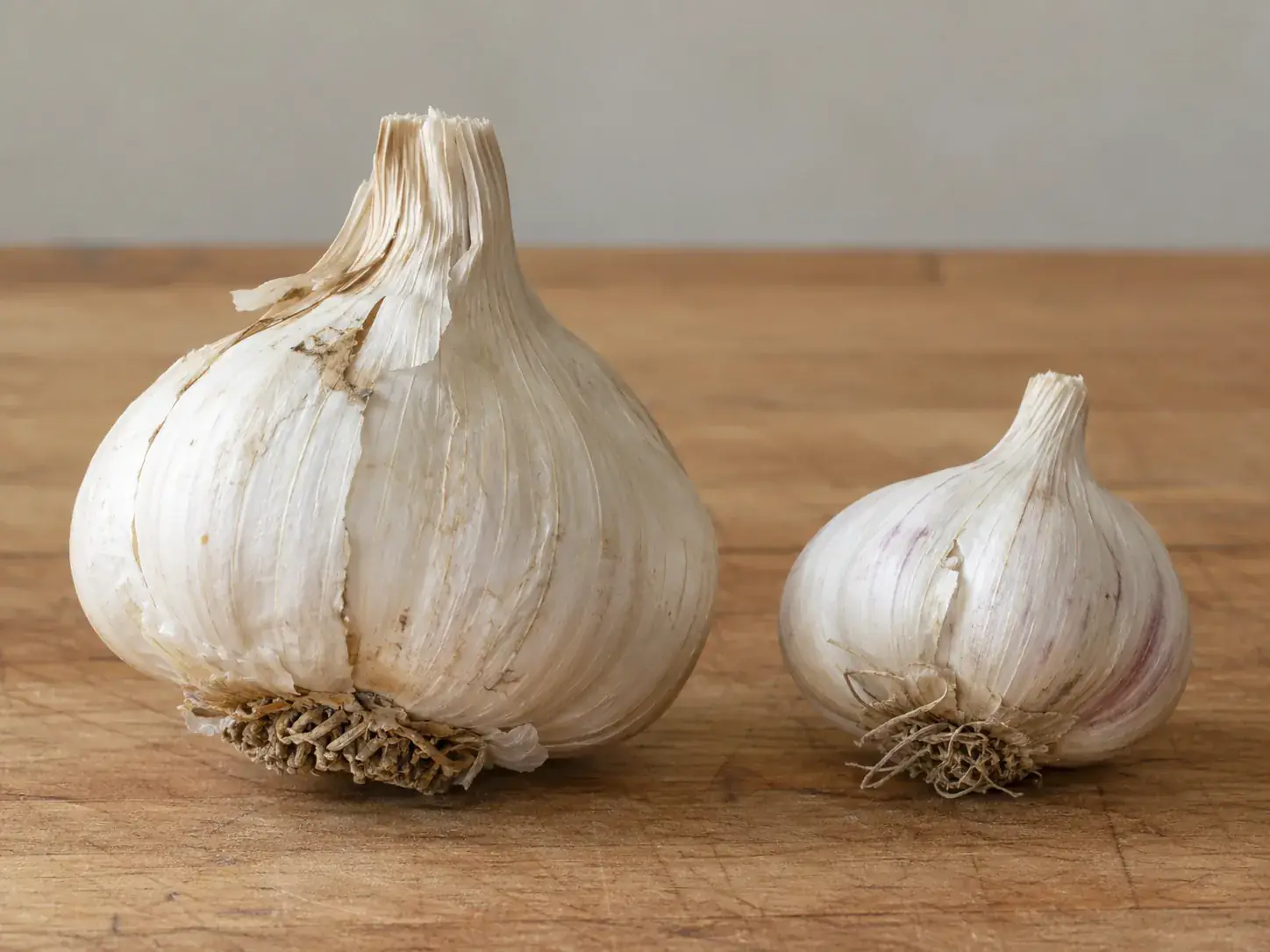
Choosing garlic varieties for hydroponics comes down to what you want to harvest. Almost any firm clove grows greens. For bulbs, the type matters: softneck garlic is the forgiving choice for indoor Kratky jars, while hardneck garlic needs more cold but rewards you with scapes and big cloves.
Two families: softneck and hardneck
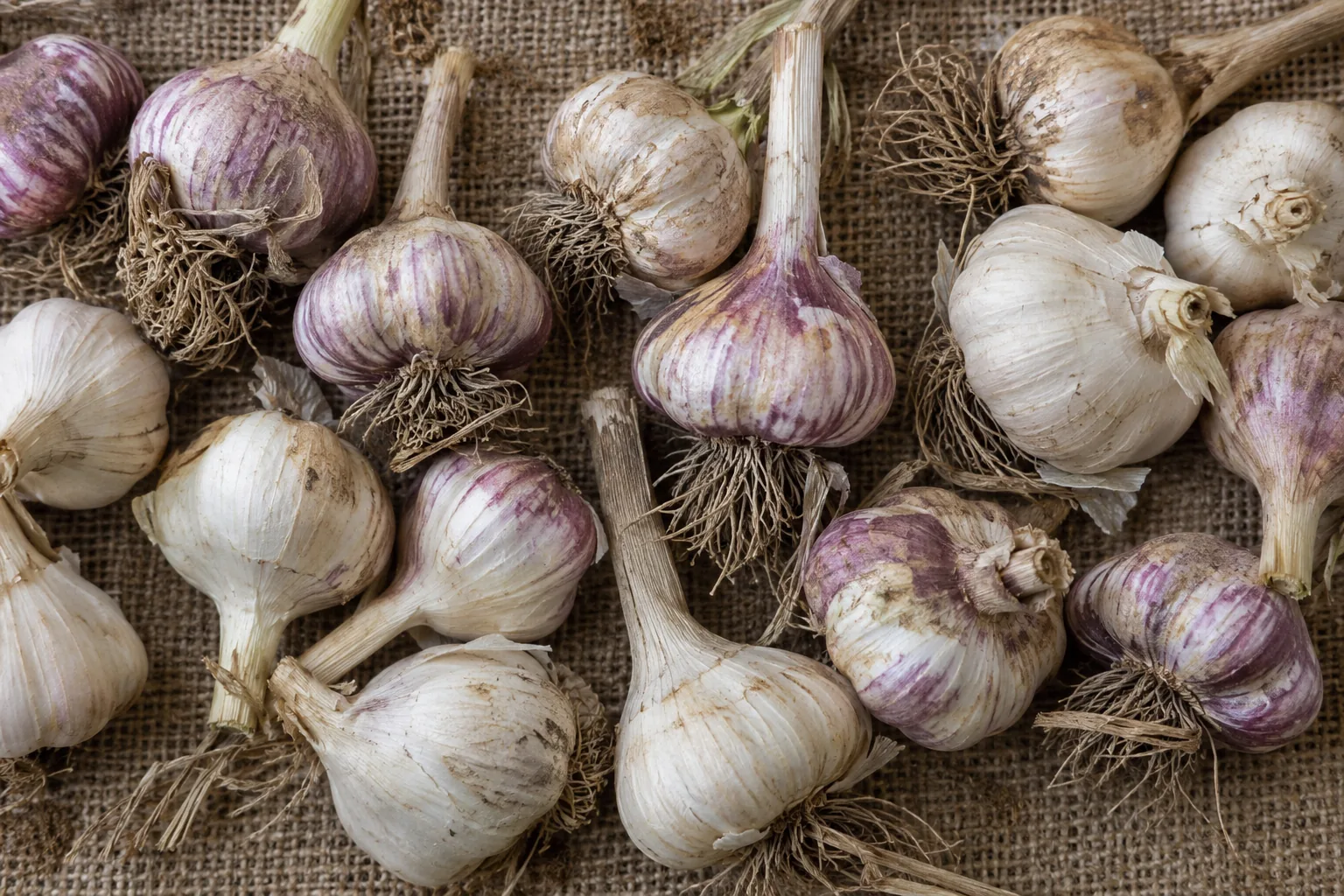
Garden garlic (Allium sativum) comes in two broad groups. Hardneck garlic grows a stiff flower stalk, the scape, from the center of the bulb. Softneck garlic rarely if ever makes a scape, which leaves a soft, braidable neck. Oregon State University notes that all wild garlic is hardneck, and that the common commercial softnecks, such as California Early and California Late, rarely produce a seed stalk.
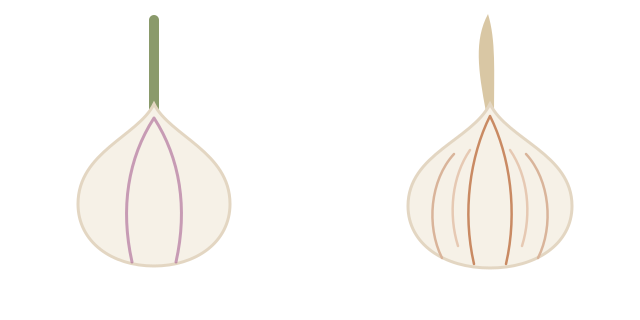
| Softneck | No scape (or rarely). More cloves per bulb. Usually less demanding about cold. Stores well. Most supermarket garlic is softneck. |
|---|---|
| Hardneck | Makes a scape. Fewer, larger cloves that peel easily. Generally needs a longer, colder winter to form cloves. Shorter storage life. |
Softneck groups
- Artichoke. The classic commercial softneck. Seed growers describe it as forgiving of different conditions, which makes it a good first choice for an indoor bulb.
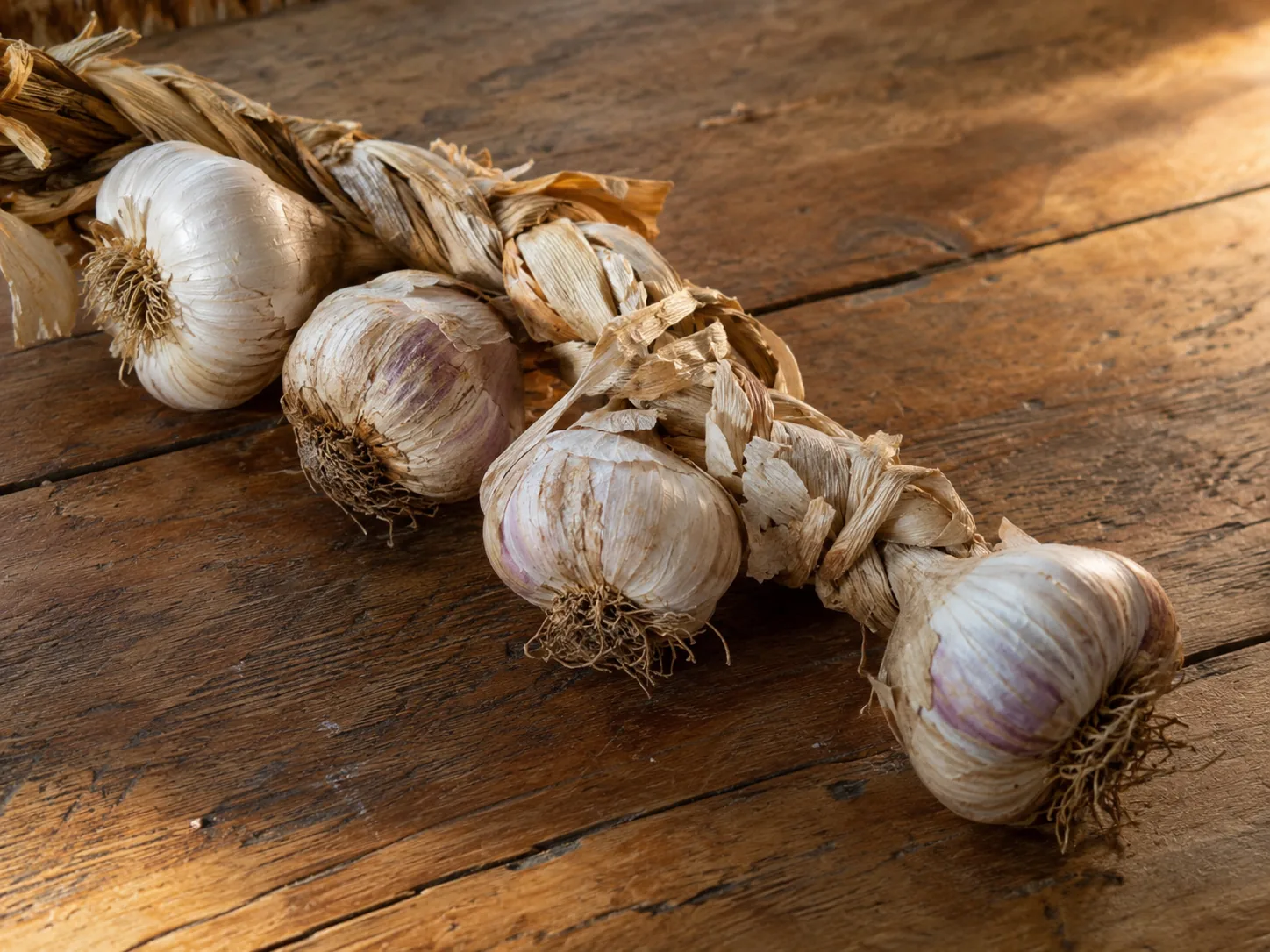
- Silverskin. Many cloves per bulb and the longest storage of the garlic groups.
Hardneck groups
- Porcelain. A few very large, easy-to-peel cloves; adapted to cold northern climates.
- Rocambole and Purple Stripe. Rich flavor and colorful wrappers; cold-loving.
- Creole and Turban. The groups seed growers recommend for warm, southern regions. Turbans are weakly bolting and may skip the scape in warm conditions.
- Asiatic. Spicy flavor and an early harvest.
Which garlic to use for each Kratky crop
For garlic greens
Any firm, healthy clove that is willing to sprout. Large cloves give bigger first cuts. Organic garlic is a better bet than conventional grocery garlic, because anti-sprouting treatments are not allowed on organic produce. See Kratky garlic greens.
For full bulbs
Seed garlic sold for planting, chilled before you start. Hydroponic garlic guides recommend softneck for indoor growing because hardneck types need at least a month or more below about 40°F and are less forgiving. If you want scapes and big cloves, try a hardneck from a warm-climate group such as Creole once you have grown a softneck. Read growing garlic bulbs hydroponically and pre-chill garlic cloves.
For garlic chives
Garlic chives are a different species, Allium tuberosum, grown from seed. See Kratky garlic chives.
Can you use grocery store garlic?
For greens, often yes. For bulbs, it is a gamble. Iowa State University Extension says planting grocery store cloves is rarely successful, for two reasons: store garlic is usually a softneck grown for warmer regions, and most of it is treated to prevent sprouting, which can make cloves rot before they sprout. Store garlic can also be old by the time you buy it. Our post grocery store garlic in water has a quick test for cloves worth trying.
What to look for in seed garlic
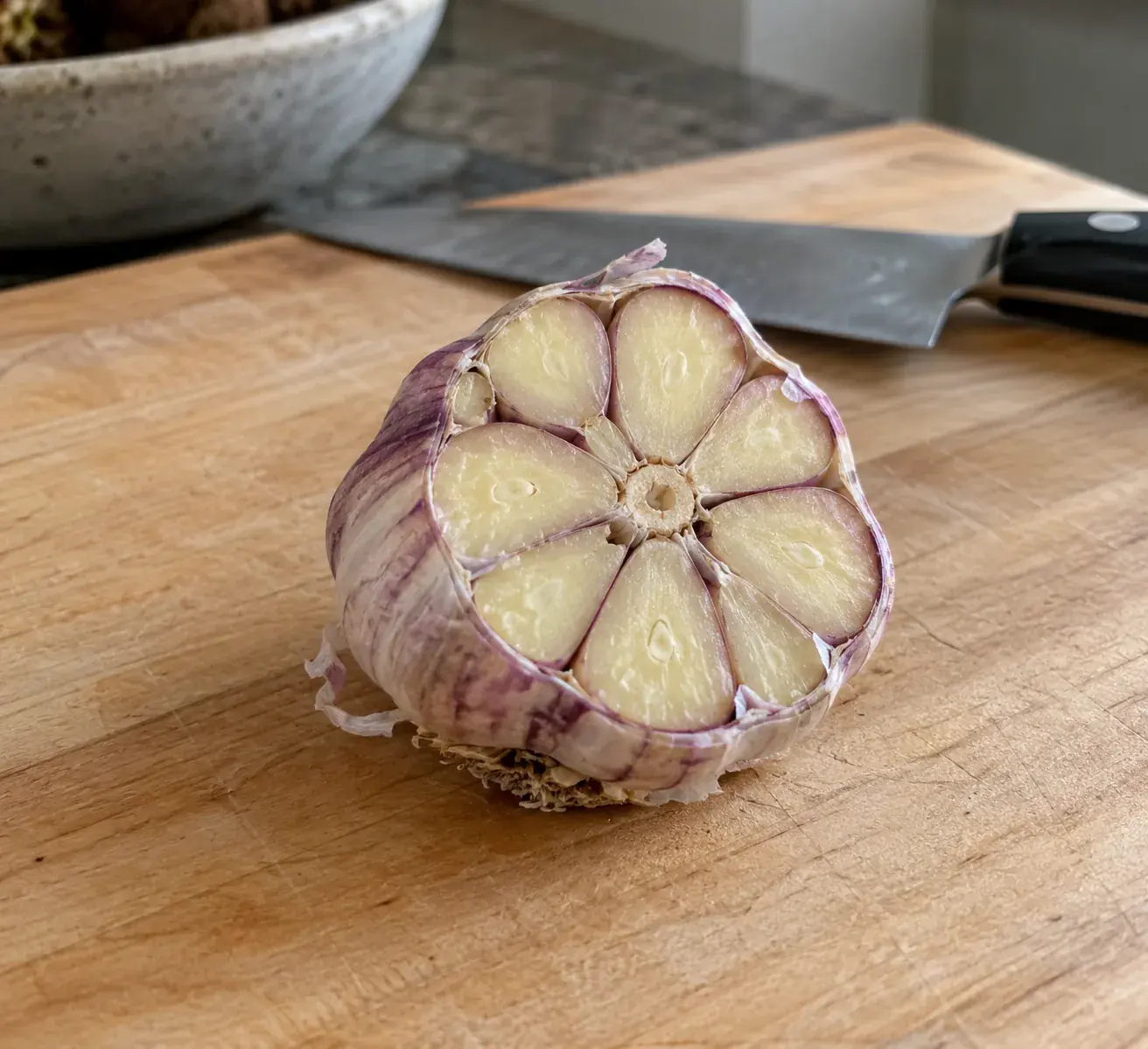
- Big, firm bulbs with tight wrappers.
- Basal plates that are clean and hard, with no gray mold. UMass Extension suggests checking the base of seed garlic with a hand lens.
- A named variety, so you know whether it is softneck or hardneck and how much cold it needs.
- Plant the biggest outer cloves; they grow the biggest plants.
Sources
- Oregon State University, Oregon Vegetables: Garlic.
- Iowa State University Extension, Yard and Garden: Can I plant garlic cloves from the grocery store in my garden?
- Siskiyou Seeds: Garlic, the 9 types; Grey Duck Garlic: Garlic families and descriptions.
- UMass Extension: Alliums, post-harvest storage diseases.
- Hydrobuilder Learning Center: How to grow hydroponic garlic.