
Troubleshooting
Kratky garlic problems
Most Kratky garlic problems trace back to a few causes: a clove sitting in water, garlic that was never going to sprout, too little light, or bulbs that never got their cold spell. Find the symptom below for the likely cause and the fix.
The clove is soft, mushy or smells bad
Likely cause: the clove is sitting in the solution, or it was already infected. Garlic cloves rot when their base stays wet, and hydroponic garlic guides stress keeping the basal plate above the waterline.
Fix: throw out the soft clove; it will not recover. Lower the solution so only the roots reach it, and start again with a firm clove. Check the next cloves’ bases before planting.
White fuzz or mold on the base
Likely cause: a fungal rot. University of Minnesota Extension describes Fusarium basal rot as a watery brown decay that starts at the base, often with white fuzzy growth on the basal plate. White rot also starts at the base and leaves tiny, hard black specks like poppy seeds. Penicillium mold can rot cloves before they ever sprout.
Fix: discard the clove and the solution, wash the container and net cup in hot soapy water, and restart with clean cloves. Cornell notes infection often enters through the basal plate, so inspect it closely and never plant a clove with a soft or moldy base.
Nothing sprouts after two weeks
Likely cause: the garlic was treated with a sprout inhibitor, or it is old. Iowa State University Extension notes that most grocery store garlic is treated to prevent sprouting. It is also possible the cloves are dormant: freshly harvested garlic can take a while to break dormancy.
Fix: switch to organic garlic or seed garlic. Cloves that are already showing a green tip inside are a safe bet for garlic greens.
Greens are pale, thin or floppy
Likely cause: not enough light, or the clove is running out of stored food after several cuts.
Fix: move the jar to the brightest window or give it 12 to 14 hours under a grow light. If the clove has been cut two or three times, start a new one.
Greens taste bitter or tough
Likely cause: they were left too long. Growers find young garlic greens mild and older ones tougher and more bitter.
Fix: cut earlier and more often, taking the upper part of the shoot.
Roots are brown and slimy
Likely cause: too little oxygen. Usually the jar was refilled to the top and the air roots were drowned, or the solution is too warm.
Fix: lower the level to restore the air gap, keep the jar out of hot sun, and when refilling a long crop fill only to the lower roots. See the Kratky garlic setup guide.
Green film or slime in the jar
Likely cause: algae, which grows wherever light reaches nutrient solution.
Fix: wrap the jar or use an opaque container, and cover any gaps around the net cup.
Yellow leaf tips
Likely cause: it depends on timing. Late in a bulb crop, yellowing is normal and tells you harvest is near. Earlier, it can mean the solution is too strong or the pH has drifted out of 6.0 to 6.5.
Fix: test the pH, and if the plant is young and the solution is old or strong, replace it with fresh solution at the label rate.
Lots of leaves, but the bulb never splits into cloves
Likely cause: the cold requirement was not met, or the days were too short. Oregon State University explains that garlic needs about six to eight weeks below 40°F to form cloves, that bulbing then depends on day length, and that heat above 85°F or water stress can reverse the cold treatment. The result is often a single round bulb.
Fix: next time, pre-chill garlic cloves for the full six to eight weeks, choose a softneck variety, give long days once the plant is leafy, and keep the room below 85°F. The round bulbs are still good to eat. Full plan: growing garlic bulbs hydroponically.
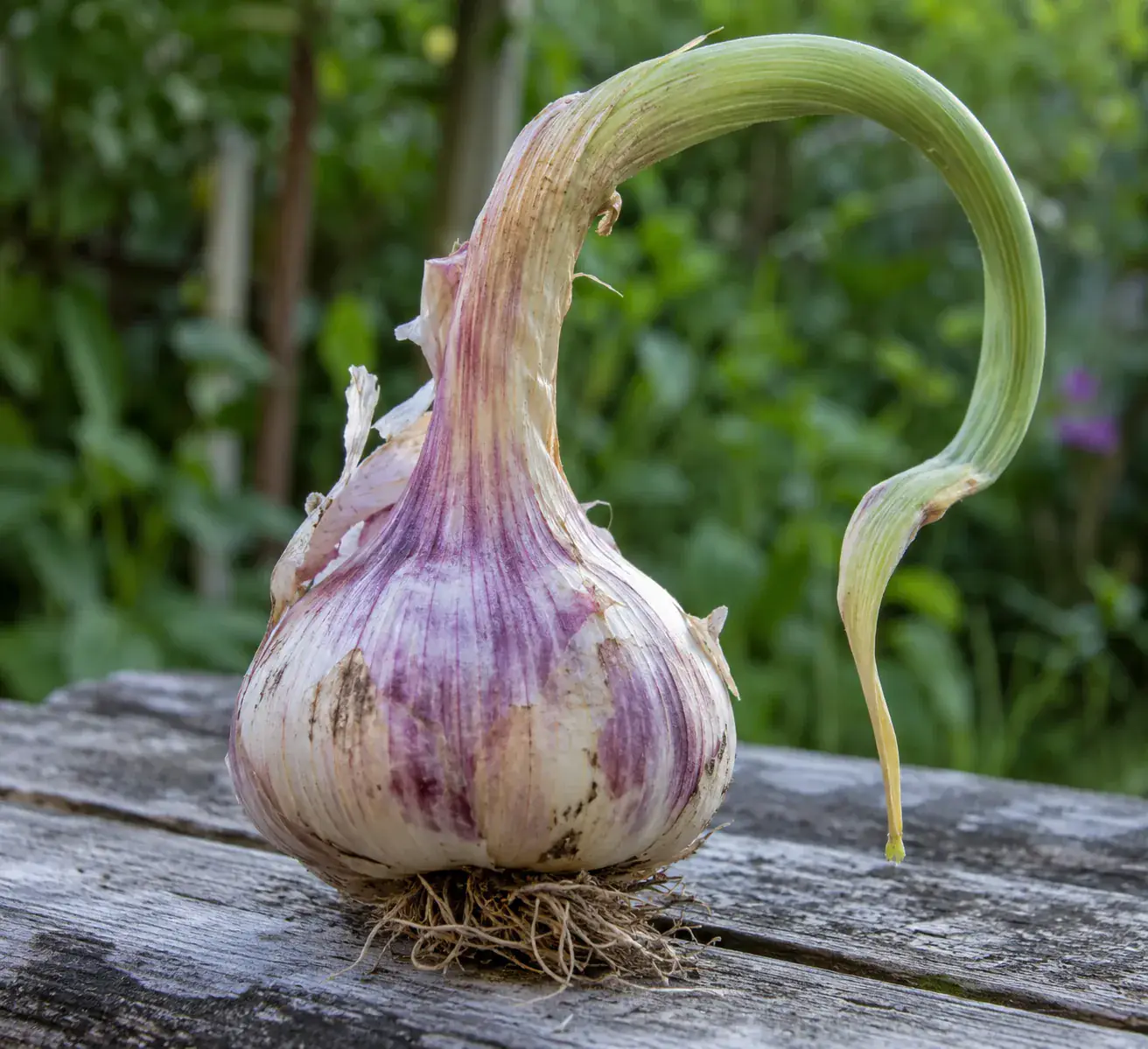
The plant sent up a curly stalk
That is a scape, and it is normal for hardneck garlic. Cut it when it curls: it is delicious, and removing it helps the plant put energy into the bulb. More in garlic greens vs green garlic vs scapes.
Bulb wrappers split or cloves fall apart
Likely cause: harvested too late. Oregon State notes that too much water late in the crop makes the wrappers deteriorate and the bulbs shatter.
Fix: harvest when about half the leaves are brown, and let the reservoir run lower near the end.
Sources
- University of Minnesota Extension: garlic diagnosis pages (bulb rotten, bulb fuzzy, roots discolored).
- Cornell University: garlic diseases fact sheet.
- Iowa State University Extension, Yard and Garden: grocery store garlic.
- Oregon State University, Oregon Vegetables: Garlic.
- Hydrobuilder Learning Center: How to grow hydroponic garlic.